You Like Your Therapist. But Is Therapy Actually Working?
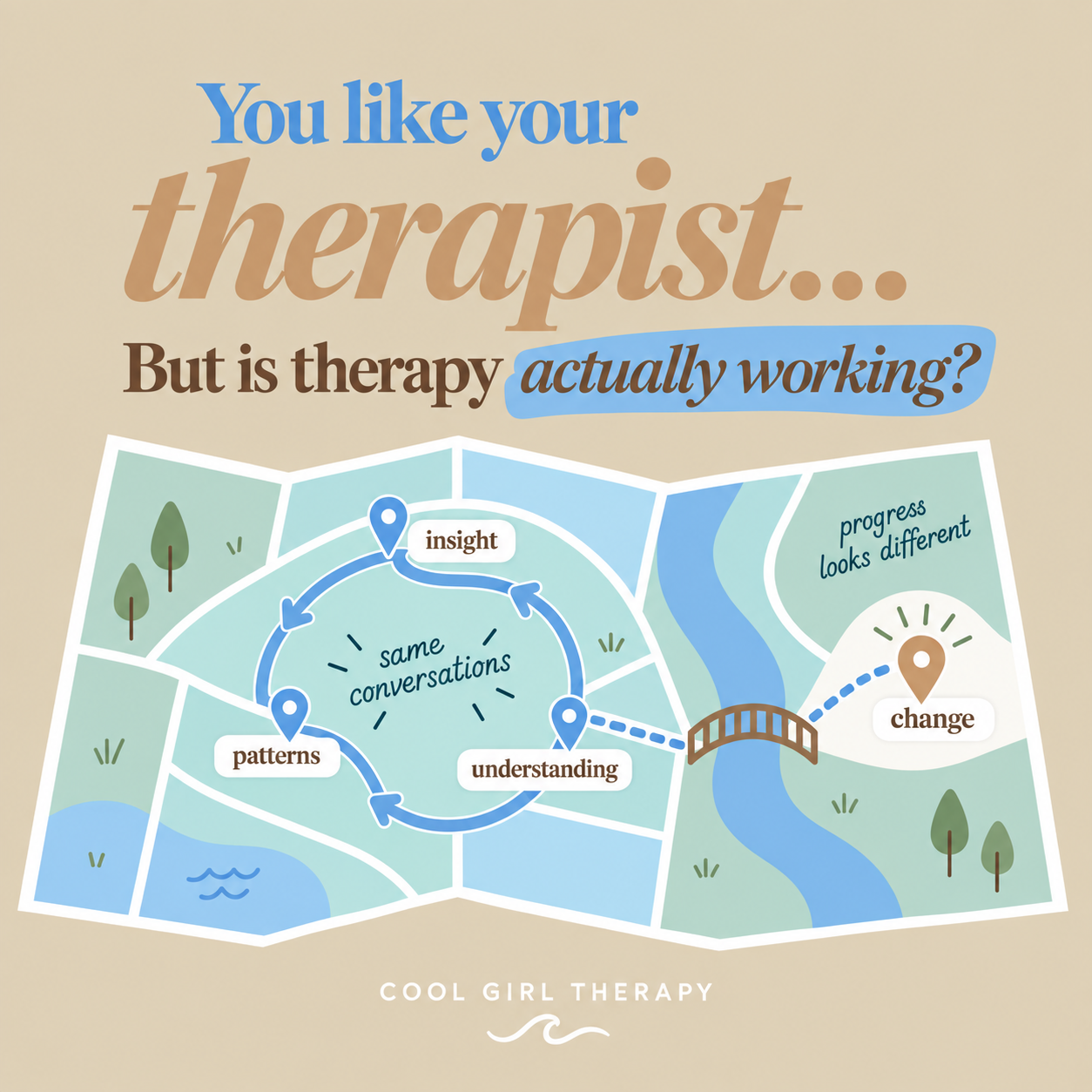
You like your therapist. They're warm, easy to talk to, and you look forward to sessions. Sometimes you leave thinking, That was such a good conversation.
But a few months in, another thought starts creeping in:
Am I actually getting better?
Maybe you're still having the same fights. Still saying yes when you mean no. Still understanding your patterns really well without feeling any more able to change them.
And that feels awkward, because your therapist isn't bad. You really like them.
So are you supposed to leave? Not necessarily. But it's worth paying attention to.
Liking your therapist isn't the same as good fit
There's a reason the relationship gets so much attention. The therapeutic alliance is one of the most consistent predictors of whether therapy works, more consistent than which specific type of therapy you're doing. One large meta-analysis pooled 295 studies covering more than 30,000 clients and found the link between alliance and outcome held up across treatment approaches, client characteristics, and countries. (Notably, it was about the same for online therapy as for in-person.)
But here's the part that often gets lost. In that research, "alliance" doesn't just mean whether you like each other. It has three parts: the emotional bond, agreement on the goals of therapy, and agreement on the tasks, meaning how you'll get there. Warmth is one piece of it. If you and your therapist have never really clarified what you're working toward or how, you may have the bond without the rest.
So feeling respected, understood, and safe enough to be honest genuinely matters. It's just not the only measure of whether therapy is helping.
Sometimes therapy slowly turns into a really good weekly conversation. You talk about what happened, your therapist listens, you feel understood, and next week you do it again.
There's nothing wrong with supportive therapy. Sometimes support is exactly what someone needs. But if you came to therapy wanting something to change, it's reasonable to ask whether the work is moving in that direction.
Progress is usually quieter than you expect
Before deciding therapy isn't working, it helps to know what progress actually looks like.
Maybe you still people-please, but now you notice yourself doing it. Maybe you still feel guilty after setting a boundary, but you don't take it back. Maybe conflict still makes you anxious, but you recover in an hour instead of replaying it for three days.
So instead of asking "Am I fixed?" try asking: What's different now compared with when I started?
But sometimes you really are stuck
You might have plenty of insight and still have the same reactions. You understand why you people-please, but you still can't tolerate disappointing anyone. You know exactly where your relationship pattern came from, but knowing hasn't changed what happens when you feel rejected.
That doesn't automatically mean you need a new therapist. It may mean the therapy needs to change. Maybe the goals need to be clearer. Maybe you need more structure, or more challenge. Maybe you've spent a long time understanding the pattern and now need to practice doing something different.
Tell your therapist
This is the part people really don't want to do.
That would be so rude. What if I hurt their feelings?
Which, depending on why you came to therapy, may be a very interesting pattern all by itself.
A good therapist should welcome a conversation about how therapy is going. You could say:
"I really like working with you, but I've been wondering whether we're making progress."
"I understand myself better, but I'm not sure my behavior is changing."
"I think I need more structure or direction in sessions."
Your therapist may see progress you haven't noticed. They may agree the work has gotten repetitive. You may decide together to shift the focus. Either way, therapy should be one place where you can say "this isn't working for me" without having to manage the other person's reaction.
Comfort and challenge both matter
Therapy shouldn't feel terrible every week. But it probably shouldn't feel like pleasant conversations with someone who agrees with everything you say, either.
Sometimes useful therapy means hearing something you don't want to hear, like your therapist noticing you keep making exceptions to the boundary you say you want, or that the pattern you're frustrated with is happening in the therapy room too.
And leaving a session sad, raw, or exhausted doesn't mean something went wrong. Sometimes you just spent 50 minutes on something painful you usually avoid. What's worth bringing up is repeatedly feeling destabilized, unsafe, or significantly worse between sessions.
The goal is both: enough safety to be honest, and enough challenge that something can actually move.
Sometimes it's not the right fit for what you need now
A therapist can be a good therapist and still not be the right one for you. Maybe their style is very nondirective and you need more structure. Maybe what you came in for has changed, or you need more specialized support.
That doesn't mean your time together was wasted. Sometimes one therapist helps you understand the problem, and another helps you work on the next part. A thoughtful therapist should be open to talking about that too. (More on that in Why a Therapist Might Refer You Out.)
You're allowed to evaluate therapy
If you're used to being agreeable, you might find yourself worrying more about whether your therapist likes you than whether therapy is helping you.
But you're allowed to ask questions. To want clearer goals. To say you feel stuck. And to decide that someone you genuinely like isn't the right therapist for you anymore.
The goal isn't finding a therapist who deserves a five-star review for being nice. It's finding a therapeutic relationship that helps you understand yourself, practice something different, and move toward the life you actually want.
So if you like your therapist but aren't sure therapy is helping, you don't necessarily need to leave. But you probably do need to talk about it.
Looking for online therapy in California and wondering if a different approach might fit better? Schedule a free 15-minute consultation. We can talk about what you've tried, what feels missing, and whether weekly virtual therapy with me makes sense for you.