Signs You Might Need Couples Therapy (Even If Your Relationship Isn’t in Crisis)
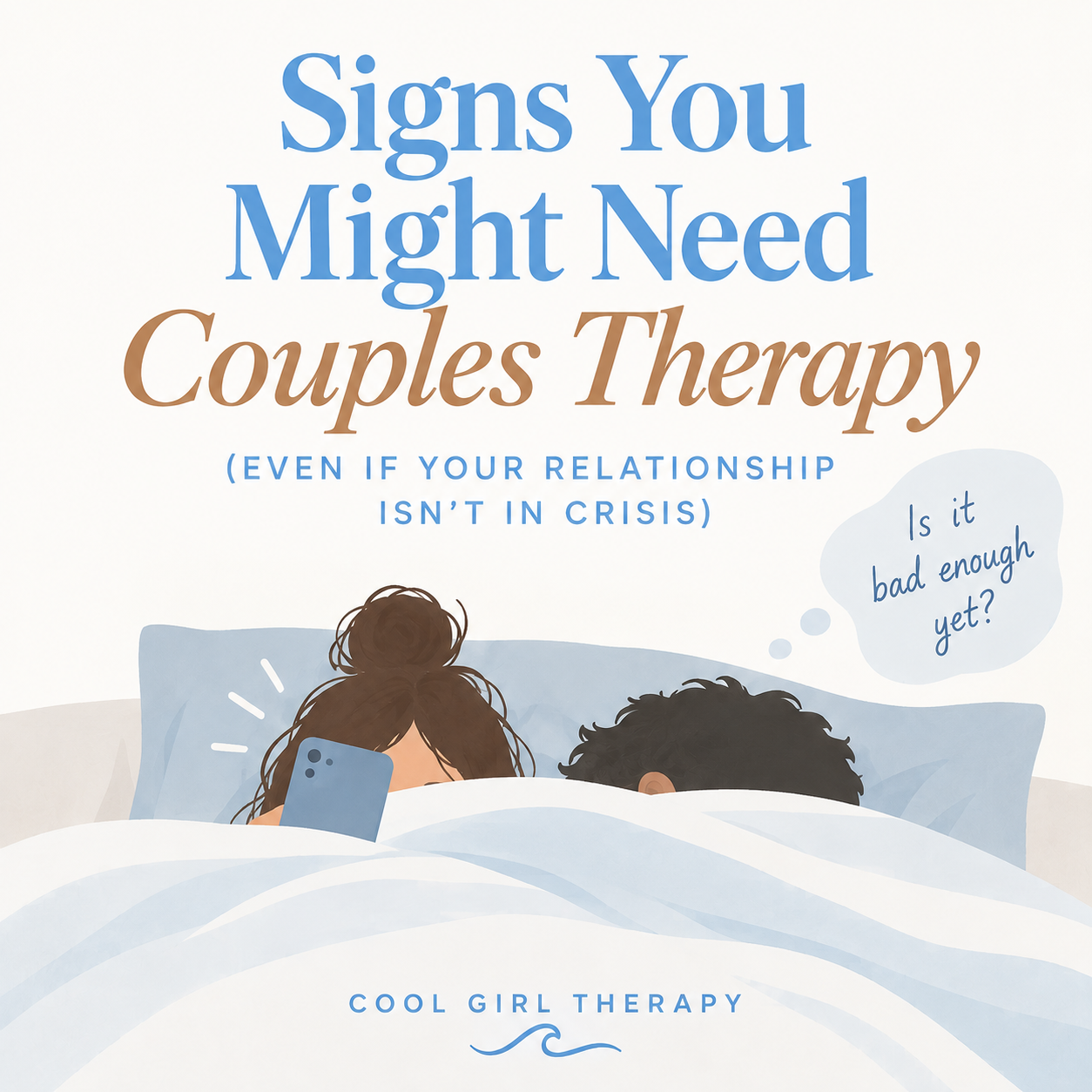
It’s 11 p.m. Your partner is asleep next to you, and you’re googling “signs you need couples therapy” with your phone brightness turned down like you’re doing something you’re not supposed to be doing.
Maybe things aren’t bad. No one cheated. No one has packed a suitcase. You still laugh together. You still have good days. If someone asked how things were going, you’d probably say, “Good.”
But you keep having the same argument. Or you’ve stopped having the argument because bringing it up feels more exhausting than letting it go. Maybe you feel a little more like roommates lately. Maybe there are things you tell your best friend because you don’t know how to say them to the person you actually want to hear them.
And now you’re wondering: Do we actually need couples therapy? Is it really bad enough for that?
You don’t have to wait for your relationship to be in crisis before getting support. Sometimes the reason to start couples therapy is much quieter: you love each other, but you keep getting stuck in something you haven’t been able to change on your own.
Is It Too Early for Couples Therapy?
If you’re wondering when to start couples therapy, you might be imagining therapy as the relationship equivalent of an emergency room. You go when someone cheated, someone wants out, or you’ve had the same screaming match so many times your neighbors probably know the plot.
But couples therapy doesn’t have to start with a crisis.
Maybe there’s a pattern you’re starting to notice. Maybe you’ve tried talking about it yourselves and somehow end up in exactly the same place. Maybe nothing is technically “wrong,” but something between you doesn’t feel as easy, close, or connected as it used to.
Going earlier doesn’t mean your relationship is more dramatic. It means you don’t have to wait until resentment has had years to settle in before trying something different.
What Are the Signs You Need Couples Therapy?
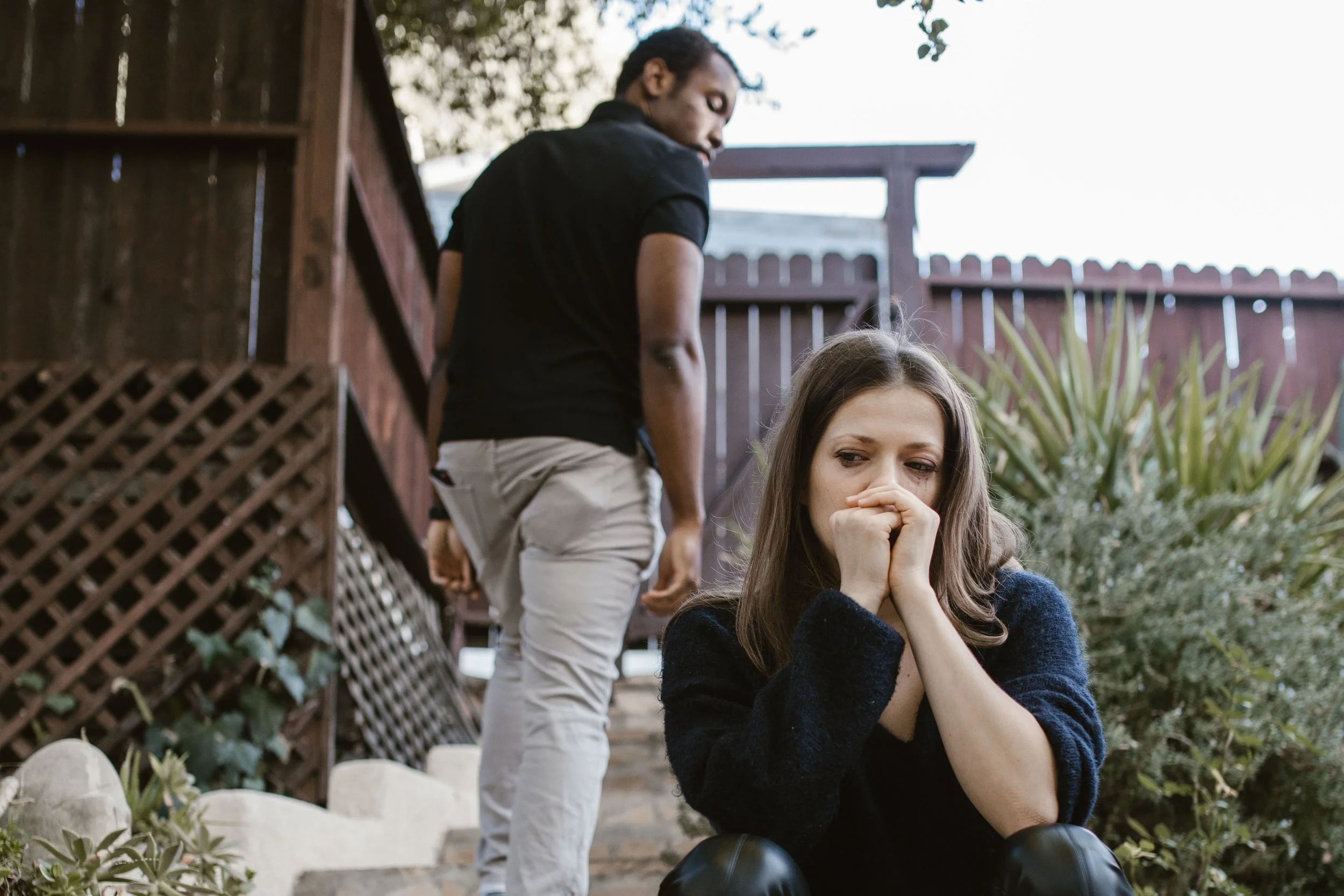
There isn’t a test you pass that officially qualifies your relationship for therapy. And the signs you need couples therapy aren’t always dramatic enough to make a good season finale.
Sometimes they look more like this.
You Keep Having the Same Argument in Different Fonts
This week it’s the dishes. Last month it was how much time you spend with their family. Next week it’ll be money, plans, sex, or the fact that someone said “whatever” in a tone that definitely did not mean whatever.
The subject changes, but somehow the argument ends in the same place.
Maybe you’re trying to say, I don’t feel considered.
And they hear, Nothing I do is ever enough for you.
Or they’re trying to say, I need some space.
And you hear, You don’t care about me.
Eventually, you realize you’re not having ten different fights. You’re having the same fight in ten different outfits.
That’s often where couples therapy can help—not by deciding who was right about the dishes, but by slowing down what keeps happening underneath them.
You’ve Started Deciding It’s Easier Not to Bring Things Up
You know something bothered you. You even thought about saying something. Then you pictured how the conversation might go and decided, Never mind. It’s fine.
Except then something else was fine. And something else. And six weeks later you’re inexplicably furious about the way they loaded the dishwasher, and even you know the dishwasher did not earn this.
Going quiet isn’t always the same thing as being at peace. Sometimes you stop bringing things up because having the conversation feels more expensive than swallowing what you wanted to say.
Your Friend Knows More About the Relationship Than Your Partner Does
Your best friend gets the voice note. Your sister gets the screenshot. The group chat gets the full postgame analysis.
Your partner gets: Nothing. I’m fine.
Having people outside your relationship to talk to is healthy. But it can be worth paying attention when the person you most want to understand you becomes the person you’re least comfortable telling how you actually feel.
You’re Really Good at “Keeping the Peace”
Maybe you’re the flexible one. The chill one. You don’t want everything to become A Thing, so you go along with it. You let it go. You tell yourself it doesn’t matter that much.
From the outside, that can look like a relationship without much conflict.
But if one person is constantly accommodating to keep things running smoothly, the absence of fighting doesn’t necessarily mean everything is okay.
You can keep saying it’s fine for a surprisingly long time. The problem is that all those little it’s fines tend to send you a bill eventually.
You Feel More Like Logistics Coordinators Than Partners
The household is functioning beautifully. Rent? Paid. Groceries? Ordered. Dog? Walked. Calendar? Synced.
You know who’s picking up dinner and what time you need to leave Saturday to make it to their parents’ house.
But somewhere between coordinating appointments and asking whether you need toilet paper, you stopped feeling particularly connected.
Emotional distance in a relationship doesn’t always look like fighting. Sometimes it looks like being incredibly good at running a life together while quietly wondering where the us part went.
You Feel Lonely Even Though You’re Still Together
Relationship loneliness is strange because technically, somebody is right there.
Maybe you still spend plenty of time together. Maybe you sleep in the same bed every night. Nothing looks obviously wrong from the outside.
But you don’t feel known in the same way.
You miss being curious about each other. You miss feeling like you’re on the same team. Or you miss something you can’t quite name, which makes it even harder to bring up.
That counts too.

Do You Need Couples Therapy If Nothing “Big” Happened?
You don’t need a betrayal to qualify.
No one has to cheat. No one has to threaten divorce. You don’t need one giant, undeniable relationship problem before couples counseling makes sense.
Maybe part of you is thinking, But other couples have actual problems.
Or, We still love each other. Isn’t therapy for people who don’t?
Love and difficulty can exist at the same time. You can love someone and struggle to communicate with them. You can have a good relationship and still have patterns that hurt.
You don’t have to prove your relationship is bad enough to deserve help making it better.
What About Couples Therapy Before Marriage?
You also don’t have to wait until something is wrong.
Maybe you’re engaged, talking seriously about marriage, moving in together, or making the kinds of decisions that suddenly make the relationship feel a little more grown-up.
And you’re realizing there are some things you probably should talk about before you’re choosing a seating chart and arguing over whether your cousin gets a plus-one.
Money. Kids. Sex. Careers. Religion. Where you’ll live. Family involvement. Holidays. Gender roles. What happens when a parent gets older and needs more support. How much information your families get about your relationship. What “being a good partner” actually means to each of you.
Premarital counseling isn’t about looking for problems that aren’t there. It can be a space to have conversations that are much easier to have before you’re in the middle of them.
For multicultural couples, those conversations can carry another layer. Maybe one of you grew up assuming parents would be deeply involved in married life while the other assumed marriage meant creating more separation from family. Maybe you have different expectations around religion, money, caregiving, holidays, gender, or what loyalty to family looks like.
You can love each other deeply and still discover that you were handed very different instruction manuals for what a marriage is supposed to be.
That doesn’t automatically mean you’re incompatible.
It means there’s something worth understanding.
When Should You Go to Couples Therapy?
There isn’t one universally correct moment. But it may be worth considering couples therapy when:
You keep having the same unresolved arguments, even when the subject changes.
One or both of you have started avoiding difficult conversations.
You feel emotionally distant, disconnected, or more like roommates.
Resentment is building even though there hasn’t been one major crisis.
One person is doing most of the accommodating to avoid conflict.
You’re navigating family, culture, trust, intimacy, or relationship expectations you can’t seem to work through together.
You’re considering marriage or another major commitment and want to talk through expectations about your future.
You both want things to feel different but keep falling back into the same pattern.
Sometimes the question isn’t Is our relationship bad enough for couples therapy?
It’s Do I want us to keep doing this the same way?

What About Culture, Family, and Different Ideas About Relationships?
Sometimes the argument happening in your kitchen has more people in it than the two people actually standing there.
You may have grown up with completely different ideas about what partnership is supposed to look like. What you tell your family. How involved parents should be. What loyalty means. Who does what in a relationship. Whether conflict gets talked through immediately or quietly disappears until everyone pretends it never happened.
Neither of you invented those expectations from scratch.
For multicultural couples especially, differences around family systems, gender roles, communication, closeness, and cultural expectations can make an already complicated relationship pattern harder to untangle.
This is part of the work we do in couples therapy for relationship issues in California at Cool Girl Therapy: not figuring out which person has the objectively correct way of doing relationships, but getting curious about what each of you learned—and what each of you is protecting.
What Actually Happens in Couples Therapy?
If you’ve never been, you may be picturing a therapist sitting between you while both of you present your case and wait for a professional to announce who was right.
That’s not the goal.
Couples therapy isn’t supposed to be a referee with better throw pillows.
The more useful questions are usually: What keeps happening between us? What happens inside each of us when we get there? And why is this pattern so hard to get out of once it starts?
Sometimes understanding the fight means understanding what it represents. That can include how you learned to handle conflict growing up, what closeness looked like in your family, what happened when someone was angry, how needs were expressed (or weren’t), and what you learned you had to do to stay connected to the people you loved.
The goal isn’t to diagnose which one of you is the problem.
It’s to understand the relationship happening between you well enough that you can start responding to each other differently.
What If My Partner Doesn’t Want Couples Therapy?
You finally work up the courage to say, I think we should talk to someone, and they hear:
Our relationship is failing.
You think I’m the problem.
You’ve already decided this isn’t working.
If your partner isn’t immediately on board, that doesn’t necessarily tell you how much they care about the relationship. Sometimes it tells you what couples therapy means to them.
It may help to talk about what you actually want from therapy rather than trying to convince them that your relationship “needs” it.
And if your partner still won’t go, that’s its own conversation—because there are things you can control when one person wants couples therapy and things you can’t.
Does Going to Couples Therapy Mean Your Relationship Is Failing?
No.
The question Are we really at the point where we need therapy? assumes there’s some invisible relationship-health line you have to cross before you’re allowed to ask for help.
There isn’t.
You can come because you’re fighting constantly. You can come because you barely fight anymore and you’re not sure that’s actually a good thing. You can come before marriage because you want to understand each other better before building a life together.
Or you can come because your relationship is important enough to you that you’d rather understand the pattern now than wait to see what another few years of it does.
Online Couples Therapy in California
If you’re in California and you recognized your relationship somewhere in this post, Cool Girl Therapy offers online couples therapy in California for communication problems, recurring conflict, emotional distance, multicultural relationships, family and in-law dynamics, gender roles and relationship expectations, trust, premarital concerns, and rebuilding closeness.
The work isn’t about deciding who is right.
It’s about understanding what you’re both protecting.
You don’t need to arrive with a perfectly articulated explanation of what’s wrong. And you definitely don’t need to wait until one of you has a foot out the door.
Sometimes the starting point really is:
We love each other. We just don’t want to keep doing this the same way.
Frequently Asked Questions About Couples Therapy
How do you know if you need couples therapy?
You might consider couples therapy if you keep having the same unresolved conflicts, avoid important conversations, feel disconnected or resentful, struggle to understand each other, or simply know you want something about the relationship to change. You do not have to wait for a crisis.
Is it too early to go to couples therapy?
No. Couples therapy can be useful when you first notice a recurring pattern, not only after that pattern has become a major source of conflict.
Do you have to be married to go to couples therapy, or can you go before marriage?
You can go while dating, living together, engaged, or preparing for marriage. Premarital counseling can help you talk through communication, conflict, finances, family expectations, children, culture, religion, gender roles, and what each of you expects from marriage.
Can couples therapy help if you don’t fight?
Yes. Not fighting doesn’t always mean there isn’t conflict. Sometimes one or both people avoid difficult conversations, accommodate to keep the peace, or feel increasingly disconnected without openly arguing.
What if only one person wants couples therapy?
It may help to tell your partner what you hope could be different rather than presenting therapy as evidence that something is wrong with them. If they still aren’t willing to attend, individual therapy can also give you space to understand your own needs, boundaries, and choices.
Can couples therapy help multicultural couples?
Yes. Therapy can create space to explore how different cultures, family systems, gender expectations, communication styles, and ideas about love or loyalty affect your relationship without assuming one person’s way is the “right” one.
Can you do couples therapy online in California?
Cool Girl Therapy provides online therapy for clients in California, including couples seeking support with communication, recurring conflict, emotional distance, cultural and family dynamics, premarital concerns, and rebuilding connection.
Interested to get started? Schedule a free 15-minute consultation.